
Academic Programmes
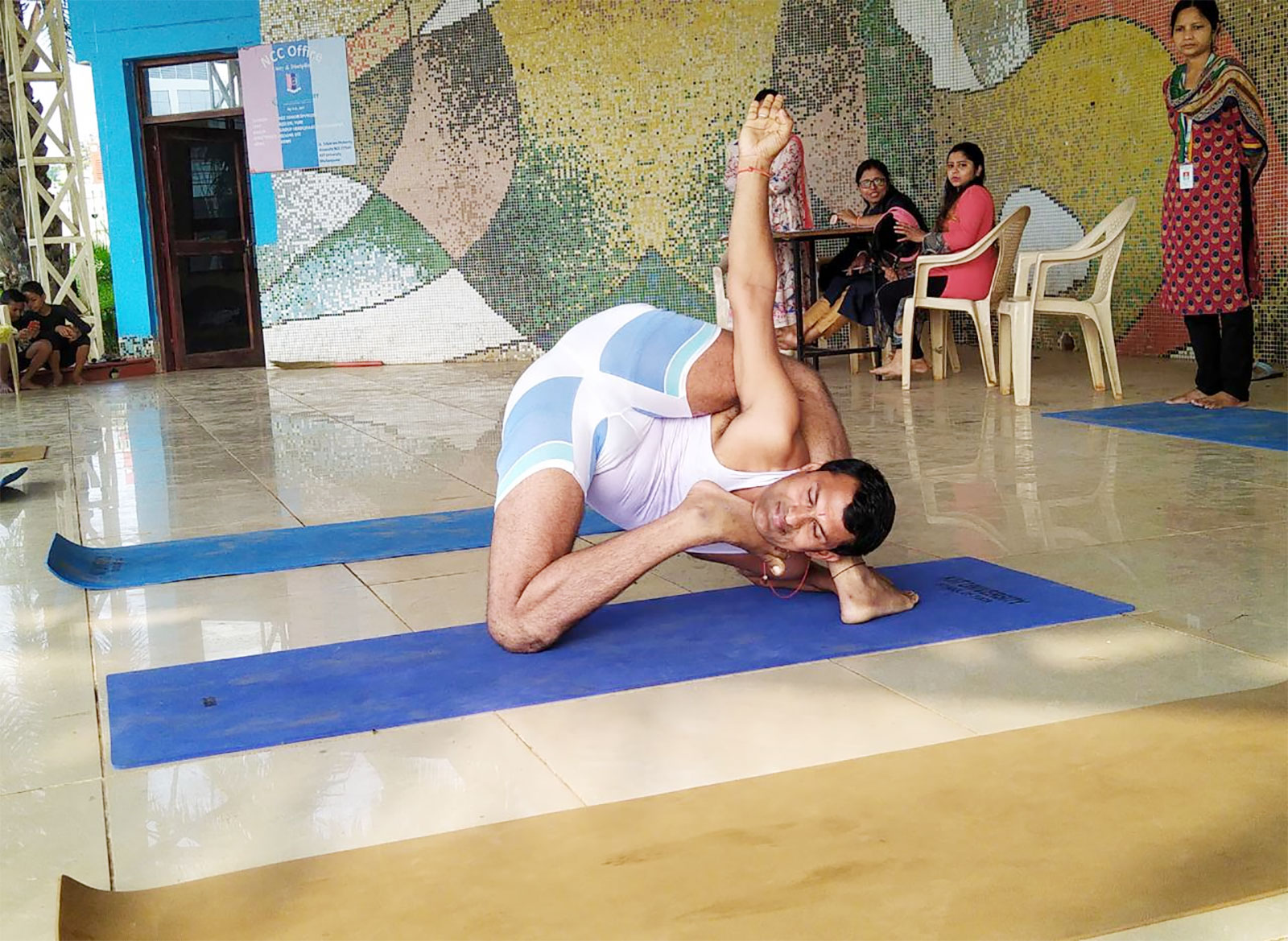
Programmes
Courses Offered are:
- Bachelor of Physical Education Sports (B.P.E.S)
- M. A. in Yoga and Naturopathy
- Masters in Physical Education and Sports
- Doctor of Philosophy in Yoga
- Doctor of Philosophy in Physical Education
Bachelor of Physical Education Sports (B.P.E.S)
Duration: 4 years
Semester: 8 Semesters
Available Seats :100
Eligibility Criteria (Qualifying Exam)
Pass in 10+2 or equivalent,
Physical Efficiency Test will be conducted to determine the general level of Physical Efficiency. Weightage will be given to the Sports persons of State, National and International Level.
Note:
Medical Fitness Certificate (as per university prescribed format) is Compulsory. Merit list will be prepared with weightage to qualifying exam and sports achievement, subject to eligibility criteria
Bachelor of Physical Education & Sports (B.P.E.S) is a 4 years degree program which prepares students for the emerging field of sports science and physical education, Bachelor of Physical Education and Sports programme is designed for students to gain specialized knowledge in the areas of physical education and sports. The programme helps the students to chalk out their pathway to become an innovator in the exciting world of physical education and sports. This course also prepares students for the emerging field of sports science and physical education, and equips the students to start careers as health, yoga and fitness instructors, fitness counselors, sports facility planners.
Physical education is not only concerned with the physical outcome that accrue from participation in physical activities but also the development of knowledge and attitude conducive to lifelong learning and participation in motor activities. The overall aim of bachelor’s degree programme in Physical Education and Sports is;
- To the acquire and refine motor skills.
- To equip the students with the scientific knowledge of body response to various types of exercise.
- To maintain fitness for optimal health and wellbeing,
- To attain knowledge and the growth of positive attitude towards physical activity and sports.
- To attain wholesome development through physical education and sports.
- To attain knowledge of the rules, regulation and their interpretation for “officiating” in sports and games.
- To inculcate the ability to organize sports and games in a professional manner.
- To enhance knowledge on scientific principles from allied subjects in Physical Education & Sports.
- To understand the concepts and role of different methods of sports training.
- To develop desirable health habits and social integration of sportspersons
This undergraduate programme in Physical Education and Sports will prepare one for a career in sports and fitness-related professions as well as in the field of education. This degree will help one teach valuable skills people need to learn to stay physically fit. Graduates in these disciplines can aspire to work in sports administration, fitness health clubs, law enforcement, hospitality industry, educational institutions, etc.
| SEMESTER I | |||||
| Course Code | Course
category |
Title of the Course | Credits | L- T-P | |
| SY11001 | Major Disciplinary courses
(compulsory) |
History and Foundation of Physical Education | 4 | 3-1-0 | |
| SY19001 | Minor Disciplinary courses | (A): Major Games – 1 (Basketball, Badminton, Kabaddi & Kho-kho) Practical | 3 | 0-0-3 | |
| SY11003 | Multi-Disciplinary courses
(compulsory) |
Basic and Systemic Anatomy &
Physiology |
3 | 2-1-0 | |
| SY11005 | Ability Enhancement courses I & II English or Indian Language | (A). English – I | 3 | 2-1-0 | |
| SY19003 | Skill Enhancement Course | (A): Indigenous Activities – I (Calisthenics, Minor Games, Drills & Marching) | 3 | 0-0-3 | |
| SY10001
SY10003 |
NEP Value added common courses I & II (compulsory) | Environmental Studies | 2 | 2-0-0 | |
| Understanding India (Theory/Field based) | 2 | 2-0-0 | |||
| Total Credits | 20 Credit | ||||
|
SEMESTER II |
|||||
| Course Code | Course
catagory |
Title of the Course | Credits | L- T-P | |
| SY11002 | Major Disciplinary courses
(compulsory) |
Exercise Physiology | 4 | 3-1-0 | |
| SY19002 | Minor
Disciplinary courses |
Major Games – II (Ballbadminton, Hockey, Table Tennis & Volleyball) Practical | 3 | 0-0-3 | |
| SY12002 | Multi-Disciplinary courses
(compulsory) |
(Physical Sciences)
Computer Applications in Physical Education |
3 | 2-0-1 | |
| SY11004 | Ability Enhancement courses I & II English or Indian Language | MIL – I
(Odiya//Hindi/ /Japanese) |
3 | 2-1-0 | |
| SY19004 | Skill Enhancement Course | Indigenous Activities- II (Dands & Baiteks, Light Apparatus & Yoga) Practical | 3 | 0-0-3 | |
| SY12004
SY12006 |
NEP Value added common courses I & II (compulsory) | Health, Wellness & Yoga Education | 2 | 1-0-1 | |
| Digital Technology (Theory/Field based) | 2 | 1-0-1 | |||
| Total Credits | 20 Credit | ||||
| SEMESTER III | |||||
| Course Code | Course
catagory |
Title of the Course | Credits | L- T-P | |
| SY21001
SY21003 |
Major Disciplinary courses
(compulsory) |
Kinesiology & Sports Biomechanics
Methods of Physical Education |
4
4 |
3-1-0
3-1-0 |
|
| SY29001 | Minor Disciplinary courses | Major Games – III (Cricket, Football, Handball & Tennis) | 3 | 0-0-3 | |
| SY22001 | Multi-Disciplinary courses
(compulsory) |
(Humanities & Social Sciences)
Sports Management |
3 | 2-0-1 | |
| Ability Enhancement courses I & II English or Indian Language | English- II | 3 | 2-1-0 | ||
| SY29003 | Skill Enhancement Course | Indigenous Activity (Lezume, General Fitness & Aerobic Dance)(Field Based) | 3 | 0-0-3 | |
| Total Credits | 20 Credit | ||||
| SEMESTER IV | |||||
| Course Code | Course
catagory |
Title of the Course | Credits | L- T-P | |
| SY21002
SY21004 SY29002 |
Major Disciplinary courses
(compulsory) |
Sports Training
Test & Measurement in Physical Education Athletics (Track & Field Events) & Indigenous Activity (Pyramid, Bharathiam Hoops) Practical |
4
4 4 |
3-1-0
3-1-0 0-0-4 |
|
| SY20002 | Minor Disciplinary courses | Athletics (Marking of Track & Field Events) Theory | 3 | 3-0-0 | |
| Ability Enhancement courses I & II English or Indian Language | English- III
MIL –II (Hindi/Odiya/japanees) |
3 | 3-0-0 | ||
| SY29004 | WP/Internship | Community Engagement | 2 | 0-0-2 | |
| Total Credits | 20 Credit | ||||
| SEMESTER V | ||||||
| Course Code | Course
catagory |
Title of the Course | Credits | L- T-P | ||
| SY31001
SY31003 SY31005 |
Major Disciplinary courses
(compulsory) |
Sports Psychology
Talent Identification in Sports Sports Injuries and Rehabilitation |
4
4 4 |
3-1-0
3-1-0 3-1-0 |
||
| SY39001 | Minor Disciplinary courses | Major Games- IV (Gymnastics, Swimming & Taekwondo) | 4 | 0-0-4 | ||
| SY39003 | Skill Development
Course |
Summer Internship | 4 | 0-0-4 | ||
| Total Credits | 20 Credit | |||||
| SEMESTER VI | ||||||
| Course Code | Course
catagory |
Title of the Course | Credits | L- T-P | ||
| SY31002
SY31004 SY31006 SY31008 |
Major Disciplinary courses
(compulsory) |
Sports Nutrition & Health Education
Adapted Physical Education Sports Engineering Sports Journalism |
4
4 4 4 |
3-1-0
3-1-0 3-1-0 3-1-0 |
||
| SY39002 | Minor Disciplinary courses | Indigenous Activities (Lezium, Mallakhamb & Weight Lifting)(Field Based) | 4 | 0-0-4 | ||
| Total Credits | 20 Credit | |||||
| SEMESTER VII | |||||||
| SINGLE MAJORS WITH OUT RESEARCH | |||||||
| Course Code | Course
catagory |
Title of the Course | Credits | L- T-P | |||
| SY41001
SY41003 SY41005 |
Major Disciplinary courses
(compulsory) |
Sports Medicine
Sports Entrepreneurship Sports Technology |
4
4 4 |
3-1-0
3-1-0 3-1-0 |
|||
| SY49001
SY49003 |
Minor Disciplinary courses | Recreation & Camping
|
4 | 0-0-4 | |||
| Educational Tour | 4 | 0-0-4 | |||||
| Total Credits | 20 Credit | ||||||
| SEMESTER VII | ||||||
| SINGLE MAJORS WITH RESEARCH | ||||||
| Course Code | Course
catagory |
Title of the Course | Credits | L- T-P | ||
| SY41001
SY41003 SY41005 SY41007 |
Major Disciplinary courses
(compulsory) |
Sports Medicine
Sports Entrepreneurship Sports Technology Posture & Athletic Care |
4
4 4 4 |
3-1-0
3-1-0 3-1-0 3-1-0 |
||
| SY49001
SY49003 |
Minor Disciplinary Course
(Any one among the two) |
Recreation & Camping
|
4 | 0-0-4 | ||
| Educational Tour | ||||||
| Total Credits | 20 Credit | |||||
| SEMESTER VIII | ||||||
| SINGLE MAJORS WITH OUT RESEARCH | ||||||
| Course Code | Course
catagory |
Title of the Course | Credits | L- T-P | ||
| SY41002
SY41004 SY41006 SY41008 SY41010 |
Major Disciplinary courses
(compulsory) |
Research Methodology in Physical Education
Application of Statistics in Physical Education Sports Technology Sports Sociology Physical Growth & Development |
4
4 4 4 4 |
3-1-0
3-1-0 3-1-0 3-1-0
3-1-0 |
||
| SY42002
SY42004 |
Minor Disciplinary
Course(Any One from among these two) |
First aid & Safety Education
Or Fitness Management |
4 | 2-0-2 | ||
| Total Credits | 24 Credit | |||||
| SEMESTER VIII | ||||||
| SINGLE MAJORS WITH RESEARCH | ||||||
| Course Code | Course
category |
Title of the Course | Credits | L- T-P | ||
| SY41002
SY41004 SY41006 |
Major Disciplinary courses
(compulsory) |
Research Methodology in Physical Education
Application of Statistics in Physical Education Sports Technology Sports Technology |
4
4
4 |
3-1-0
3-1-0
3-1-0 |
||
| SY47002 | Major Disciplinary | Research Project | 12
|
0-0-12 | ||
| Total Credits | 24 Credit | |||||
PEO-1: The course is designed to meet the demands of society in disseminating knowledge of physical education.
PEO-2: The programme will enable students to propagate the importance of physical education at various levels and emphasize its necessity for every individual in society to maintain good health and lead a stress-free and positive lifestyle.
PEO-3: To build the capacity of students for dissemination of information and documentation related to physical education and sports based on research findings, evaluation, studies, programmes, experiments and activities concerning society in general and individuals in particular.
PEO-4: To train students to meet the challenges faced by sportspersons with respect to doping, which is harmful to health and contrary to sporting ethics, and to protect the physical and mental health of athletes, promote fair play and competition, uphold the integrity of the sporting community, and safeguard the rights of participants at all levels.
PEO-5: Through the research components of the programme, students will be able to develop innovative methods of teaching and enhance standards of sports performance.
PEO-6: Students graduating from this programme are expected to contribute to the maintenance and improvement of health, provide wholesome leisure-time activities, and help individuals overcome the challenges of modern living.
PEO-7: Students will develop qualities such as willpower and self-discipline to become fully integrated and responsible members of society through physical education and sports at both individual and community levels.
PEO-8: Students are expected to contribute to the development of scientific programmes for achieving health and fitness in the corporate sector by applying knowledge gained from allied sciences and foundation courses.
PO1 – Professional Knowledge: Possess and acquire scientific knowledge required to work as professionals, optimizing human function and performance.
PO2 – Demonstrate and possess technical skills to provide quality care and support for athletes and teams.
PO3 – Teamwork: Demonstrate the ability to work effectively as team players and support shared goals within an interdisciplinary environment.
PO4 – Possess and demonstrate ethical values and professionalism within the legal and social framework of society.
PO5 – Communication: Communicate effectively and appropriately within interdisciplinary settings and society.
PO6 – Evidence-Based Practice: Devise assessments and programmes that are evidence-informed and aligned with professional excellence.
PO7 – Lifelong Learning: Continues to exhibit interest in enhancing knowledge and skills, which evolve over a period of time
PO8 – Entrepreneurship, Leadership and Mentorship: Display entrepreneurial inclination, leadership and mentorship skills
PSO-1: Analyze and identify the psychological, anatomical, physiological and sociological factors associated with diverse physical activities.
PSO-2: Organize, train and officiate sports and games using appropriate rules, skills and tactics.
PSO-3: Design and apply pedagogy using information technology and field-based learning for sports education.
PSO-4: Assess physical fitness, motor abilities and performance parameters using scientific methods and standardized testing procedures.
PSO-5: Plan and implement training programmes for health, fitness, wellness and sports performance enhancement.
PSO-6: Demonstrate leadership, communication and team-management skills in organizing sports events and physical education programmes.
PSO-7: Apply principles of sports nutrition, injury prevention and rehabilitation to support athlete health and performance.
PSO-8: Integrate yoga and wellness practices for promoting physical, mental and emotional well-being.
M. A. in Yoga and Naturopathy
The postgraduate programme in Yoga and Naturopathy is rigorously designed and intellectually enriching professional education aimed at developing advanced knowledge, practical competence and research aptitude in the field of yogic sciences and natural healing. The programme provides in-depth understanding of traditional yogic philosophy, naturopathic principles, therapeutic applications and holistic wellness practices. It also equips students with advanced academic and research training required for pursuing higher studies and research degrees such as doctoral programmes. The programme creates a strong pathway for students to emerge as skilled professionals, educators, therapists and researchers, empowering them to become innovators and leaders in the dynamic field of yoga, naturopathy and holistic health care.
Duration : 2 years
Semester : 4 Semesters
Available Seats : 50
Eligibility Criteria (Qualifying Exam): Any Graduate
Postgraduates of this programme can aspire to work as:
• Yoga Teachers/Instructors/Professor in Schools, Colleges, and Universities
• Naturopathy Practitioners in Clinics and Alternative Therapy Centers
• Yoga Therapists in Hospitals and Rehabilitation Centers
• Wellness Coaches in Corporate or Private Settings
• Researchers in Yoga and Holistic Health
• Consultants in Health Resorts and Retreats
• Public Health Promoters in Government or NGO Projects
• Freelance Wellness Educators and Content Creators
• Entrepreneurs in the Natural Health and Wellness Sector
| Theory | |||||||
| Sl. No. | Subject Code | Course Title | L | T | P | Total | Credit |
| 1 | SY60201 | Evolution of Yoga and Modern Concept | 4 | 0 | 0 | 4 | 4 |
| 2 | SY60203 | Patanjali Yoga Sutra | 4 | 0 | 0 | 4 | 4 |
| 3 | SY60205 | Yogic Concept in Major Upanishads | 4 | 0 | 0 | 4 | 4 |
| Total of Theory | 12 | 12 | |||||
| Practical | |||||||
| Sl. No. | Subject Code | Course Title | L | T | P | Total | Credit |
| 1 | SY69201 | Asana and Pranayama- I | 2 | 0 | 4 | 6 | 4 |
| 2 | SY69203 | Mudra and Bandha | 2 | 0 | 2 | 3 | 3 |
| Total of Practical’s | 9 | 7 | |||||
| Sessional | |||||||
| 1 | SY68201 | Seminar | 0 | 0 | 2 | 2 | 1 |
| Total sessional | 2 | 1 | |||||
| Total Semester | 21 | 20 | |||||
SEMESTAR – II
| Theory | ||||||||||
| Sl. No. | Subject Code | Course Title | L | T | P | Total | Credit | |||
| 1 | SY60202 | Principles of Human Anatomy and Physiology | 4 | 0 | 0 | 4 | 4 | |||
| 2 | SY60204 | Research Methodology and Statistics | 4 | 0 | 0 | 4 | 4 | |||
| 3 | Electives | 4 | 0 | 0 | 4 | 4 | ||||
| Total of Theory | 12 | 12 | ||||||||
| Practical | ||||||||||
| Sl. No. | Subject Code | Course Title | L | T | P | Total | Credit | |||
| 1 | SY69202 | Asana and Pranayama – II | 2 | 0 | 4 | 6 | 3 | |||
| 2 | SY69204 | Relaxation, Meditation and Shatkriyas | 2 | 0 | 4 | 6 | 3 | |||
| Total Practicals | 12 | 6 | ||||||||
| Sessional | ||||||||||
| 1 | SY68202 | Comprehensive Viva | 0 | 0 | 2 | 2 | 2 | |||
| Total sessional | 4 | 2 | ||||||||
| Total Semester | 8 | 20 | ||||||||
SEMESTER – III
| Theory | |||||||
| Sl. No. | Subject Code | Course Title | L | T | P | Total | Credit |
| 1 | SY60207 | Lights on Bhagavad Gita and Yoga Vasistha | 4 | 0 | 0 | 4 | 4 |
| 2 | SY60209 | Fundamentals of Naturopathy | 4 | 0 | 0 | 4 | 4 |
| 3 | SY60211 | Hatha Yoga Texts (Hatha Yoga Pradipika, Gheranda Samhita) | 4 | 0 | 0 | 4 | 4 |
| 4 | Elective | 4 | 0 | 0 | 4 | 4 | |
| Total of Theory | 16 | 16 | |||||
| Sessional | |||||||
| Sl. No. | Subject Code | Course Title | L | T | P | Total | Credit |
| 1 | SY68203 | Asana and Pranayama – III | 0 | 0 | 4 | 4 | 2 |
| 2 | SY68205 | Internship | 0 | 0 | 4 | 4 | 2 |
| Total Sessional | 8 | 4 | |||||
| Semester Total | 8 | 20 | |||||
SEMESTER – IV
| Theory | |||||||
| Sl. No. | Subject Code | Course Title | L | T | P | Total | Credit |
| 1 | SY60208 | Yogic Management of Diseases | 4 | 0 | 0 | 4 | 4 |
| 2 | SY60210 | Disease Management and Nature Cure | 4 | 0 | 0 | 4 | 4 |
| 3 | Elective | 4 | 0 | 0 | 4 | 4 | |
| Total of Theory | 12 | 12 | |||||
| Practical | |||||||
| Sl No. | Subject Code | Course Title | L | T | P | Total | Credit |
| 1 | Specialisation (Any One) | 0 | 0 | 4 | 4 | 2 | |
| Total practical | 4 | 2 | |||||
| Sessional | |||||||
| 2 | SY68204 | Dissertation | 0 | 0 | 0 | 12 | 6 |
| Total sessional | 12 | 6 | |||||
| Total Semester | 20 | ||||||
The postgraduate programme in Yoga and Naturopathy is rigorously designed and intellectually enriching professional education aimed at developing advanced knowledge, practical competence and research aptitude in the field of yogic sciences and natural healing. The programme provides in-depth understanding of traditional yogic philosophy, naturopathic principles, therapeutic applications and holistic wellness practices. It also equips students with advanced academic and research training required for pursuing higher studies and research degrees such as doctoral programmes. The programme creates a strong pathway for students to emerge as skilled professionals, educators, therapists and researchers, empowering them to become innovators and leaders in the dynamic field of yoga, naturopathy and holistic health care.
After successful completion of M.A. in Yoga and Naturopathy, graduates will be able to:
PEO 1: Develop advanced theoretical knowledge and practical understanding of Yoga and Naturopathy rooted in classical Indian traditions and contemporary scientific perspectives.
PEO 2: Demonstrate professional competence in yogic practices including asana, pranayama, meditation, mudra, bandha, and naturopathic therapeutic applications.
PEO 3: Apply yogic and naturopathic principles for health promotion, disease prevention, wellness management, and holistic lifestyle modification.
PEO 4: Integrate knowledge of anatomy, physiology, psychology, and research methodology in understanding yogic science and therapeutic practices.
PEO 5: Develop leadership, communication, and teaching skills for conducting yoga instruction, wellness programmes, and community outreach initiatives.
PEO 6: Undertake research and scholarly inquiry in Yoga and Naturopathy using scientific methods and evidence-based approaches.
PEO 7: Promote ethical values, cultural awareness, and traditional Indian knowledge systems through yoga and natural health practices.
PEO 8: Prepare for higher education, entrepreneurship, and professional careers in yoga therapy, naturopathy, wellness consultancy, and academic institutions.
After successful completion of M.A. in Yoga and Naturopathy, the students will be able to:
PO1 – Disciplinary Knowledge: Demonstrate comprehensive knowledge of yoga philosophy, naturopathy, therapeutic practices, and traditional yogic texts.
PO2 – Critical Thinking and Analytical Reasoning: Analyze health, wellness, and lifestyle-related issues and apply appropriate yogic and naturopathic interventions effectively.
PO3 – Research and Innovation: Design and conduct research studies in yoga and naturopathy using appropriate scientific methods and statistical tools.
PO4 – Practical Skills: Perform and teach advanced yogic techniques and naturopathy-based practices safely and effectively.
PO5 – Communication Skills: Communicate effectively with learners, patients, and professionals through teaching, counseling, and presentations.
PO6 – Ethics and Professional Values: Practice yoga and naturopathy with integrity, empathy, discipline, and professional ethics.
PO7 – Leadership and Teamwork: Lead yoga programmes and wellness initiatives and collaborate effectively in multidisciplinary teams.
PO8 – Lifelong Learning and Social Responsibility: Engage in continuous learning and contribute to community health, wellness awareness, and sustainable living.
After successful completion of M.A. in Yoga and Naturopathy, the students will be able to:
PSO 1: Interpret and apply concepts from Patanjali Yoga Sutra, Upanishads, Bhagavad Gita, Yoga Vasistha, and Hatha Yoga texts.
PSO 2: Demonstrate proficiency in advanced asanas, pranayama, meditation, shatkriyas, mudra, and bandha with therapeutic relevance.
PSO 3: Apply naturopathy and nature cure principles in preventive and curative health management.
PSO 4: Assess physiological and psychological aspects of individuals and design appropriate yogic intervention programmes.
PSO 5: Plan and conduct yoga teaching sessions in educational institutions, wellness centres, and community settings.
PSO 6: Use research methodology and statistical techniques for preparing dissertations and evidence-based academic work.
PSO 7: Integrate yoga and naturopathy practices for managing lifestyle disorders and improving overall well-being.
PSO 8: Promote Indian philosophical values, holistic wellness, and healthy living through professional and community engagement.
Masters in Physical Education and Sports
The postgraduate programme in Physical Education and Sports is rigorously designed and intellectually demanding professional education. This course will also provide the advance knowledge and research training required for higher degrees of research such as doctoral programmes. The programme helps to chalk out pathway to becoming an innovator in the exciting world of physical education and sports.
Merit prepared with weightage to qualifying exam and sports achievement, subject to eligibility criteria.
Duration : 2 years
Semester :4 Semesters
Available Seats : 60
Eligibility Criteria (Qualifying Exam):
- Pass in Bachelor in Physical Education (B.PED) or Bachelor of Physical Education & Sports (BPES), B. A / B.Sc. with Physical Education.
- Physical Efficiency Test will be conducted to determine the general level of Physical Efficiency. Weightage will be given to the Sports persons of State, national and International Level.
Note:
Medical Fitness Certificate (as per university prescribed format) is Compulsory
A Master of Physical Education and Sports opens up a wide range of career pathways for students, enabling them to work as research scholars and professionals in various domains related to physical education and sports.
Graduates can access opportunities in government jobs, private sector employment, or opt for self-employment. They can take on roles such as:
Teachers/Instructors/Sports Coaches/Fitness Coaches in:
- Government Schools (PGT)
- Private Schools (PGT)
- Government and Private Colleges
- Gyms and Fitness Centres
- Sports Franchises and Clubs
In addition, they can establish their own ventures such as:
- Gyms
- Fitness Cenre
- Yoga Centre
- Dance Fitness Studios
This course also provides avenues to become successful entrepreneurs in the fitness and wellness industry.
Postgraduates of this programme can aspire to work as:
- Teachers/Assistant Professors in Sports Colleges, Universities, and Departments
- Sports Officers in the Directorate of Youth Affairs and Sports
- Sports Administrators in Universities and Colleges
- Fitness Centre Managers
- Health Club Managers
- Coaches and Instructors
- Personal Trainers
- Sports Therapists
- Professionals in the Hospitality and Wellness Industry
SEMESTER-I
| Theory | |||||||
| Sl.No | Subject Code | Course Title | L | T | P | Total | Credit |
| 1 | SY61101 | Foundation and History of Physical Education | 3 | 1 | 0 | 4 | 4 |
| 2 | SY61103 | Physiology of Exercise | 3 | 1 | 0 | 4 | 4 |
| 3 | SY61105 | Test, Measurement and
Evaluation in Physical Education. |
3 | 1 | 0 | 4 | 4 |
| 4 | Elective-I (Any one) | 3 | 0 | 0 | 3 | 3 | |
| Practical | |||||||
| Sl.No | Subject Code | Course Title | L | T | P | Total | Credit |
| 5 | SY69101 | Training in Athletics
( Track Events) |
0 | 0 | 4 | 4 | 2 |
| 6 | Games Specialization
Elective (Any one) |
0 | 0 | 4 | 4 | 2 | |
| 7 | SY68101 | Seminar-I | 0 | 0 | 2 | 2 | 1 |
| Total Credit | 20 | ||||||
SEMESTER-II
| Theory | |||||||
| Sl.No. | Subject Code | Course Title | L | T | P | Total | Credit |
| 1 | SY61102 | Research Methodology in Physical Education | 3 | 1 | 0 | 4 | 4 |
| 2 | SY61104 | Yogic Science & Naturopathy. | 3 | 1 | 0 | 4 | 4 |
| 3 | SY61106 | Sports Biomechanics and Kinesiology | 3 | 1 | 0 | 4 | 4 |
| 4 | Elective-II (Any one) | 3 | 0 | 0 | 3 | 3 | |
| Practical | |||||||
| Sl.No. | Subject Code | Course Title | L | T | P | Total | Credit |
| 5 | SY69102 | Training in Athletics
(Field Events) |
0 | 0 | 4 | 4 | 2 |
| 6 | SY69104 | Officiating and Coaching of Games. | 0 | 0 | 4 | 4 | 2 |
| 7 | SY69106 | ICT lab | 0 | 0 | 2 | 2 | 1 |
| Sessional | |||||||
| 8 | SY68102 | Seminar-II | 0 | 0 | 2 | 2 | 1 |
| Total Credit | 21 | ||||||
SEMESTER–III
| Theory | |||||||
| Sl.No. | Subject Code | Course Title | L | T | P | Total | Credit |
| 1 | SY61107 | Sports Psychology | 3 | 1 | 0 | 4 | 4 |
| 2 | SY61109 | Statistics in Physical Education | 3 | 1 | 0 | 4 | 4 |
| 3 | SY61111 | Sports Injury, Athletic Care and Rehabilitation | 3 | 1 | 0 | 4 | 4 |
| 4 | Elective-III (Any one) | 3 | 0 | 0 | 3 | 3 | |
| Practical | |||||||
| Sl No. | Subject Code | Course Title | L | T | P | Total | Credit |
| 5 | SY69135 | Pedagogy of Games and Intramurals | 0 | 0 | 4 | 4 | 2 |
| 6 | SY69137 | Teaching Practice of Sports Skills | 0 | 0 | 4 | 4 | 2 |
| Sessional | |||||||
| 7 | SY68103 | Internship | 2 | ||||
| Total Credit | 21 | ||||||
SEMESTER–IV
| Theory | |||||||||||||
| Sl No. | Subject Code | Course Title | L | T | P | Total | Credit | ||||||
| 1 | SY61108 | Health Education and Nutrition | 3 | 1 | 0 | 4 | 4 | ||||||
| 2 | SY61110 | Sports Journalism and Mass media | 3 | 1 | 0 | 4 | 4 | ||||||
| Practical | |||||||||||||
| 3 | SY69108 | Computational Lab | 0 | 0 | 2 | 2 | 1 | ||||||
| Sessional | |||||||||||||
| 4 | SY68106 | Dissertation | 0 | 0 | 16 | 16 | 8 | ||||||
| 5 | SY68104 | Comprehensive Viva Voce | 0 | 0 | 2 | 1 | 2 | ||||||
| Total Credit | 19 | ||||||||||||
The postgraduate programme in Physical Education and Sports is rigorously designed and intellectually demanding professional education. This course will also provide the advance knowledge and research training required for higher degrees of research such as doctoral programmes. The programme helps to chalk out pathway to becoming an innovator in the exciting world of physical education and sports.
After successful completion of Master of Physical Education and Sports (MPES), the students will be able to:
PEO 1: Acquire advanced knowledge and understanding in the field of Physical Education, Sports Science, and related interdisciplinary areas.
PEO 2: Develop professional competencies in physical education, sports training, fitness, and allied areas through systematic theoretical and practical learning.
PEO 3: Demonstrate scientific understanding of sports performance, exercise physiology, biomechanics, sports psychology, and other contemporary dimensions of physical education.
PEO 4: Apply practical skills and professional techniques required for teaching physical education, coaching sports, and promoting health and fitness.
PEO 5: Develop research aptitude and analytical abilities to conduct scholarly investigations and contribute to the advancement of physical education and sports sciences.
PEO 6: Build leadership, communication, and organizational skills necessary for effective management of sports events, institutions, and professional responsibilities.
PEO 7: Promote ethical values, teamwork, discipline, and social responsibility while contributing to the development of sports culture and physical well-being in society.
PEO 8: Prepare for diverse career opportunities as physical education teachers, sports coaches, sports scientists, fitness trainers, sports administrators, and for higher studies and lifelong professional growth.
After successful completion of Master of Physical Education & Sports, the students will be able to:
PO1 – Critical Thinking and Analytical Reasoning: Analyse, evaluate and interpret evidence, arguments, claims and beliefs on the basis of empirical evidence; reflect on their implications in real-life situations; formulate logical arguments; critically evaluate practices, policies and theories to develop knowledge and understanding; and apply reflective thinking to societal concerns.
PO2 – Scientific Reasoning and Problem Solving: Analyse, discuss, interpret and draw conclusions from quantitative and qualitative data as well as experimental evidence; critically evaluate ideas, evidence and experiences from an unbiased and reasoned perspective; extrapolate learning to solve problems; contextualize research; and apply knowledge to real-life situations.
PO3 – Multidisciplinary / Interdisciplinary / Transdisciplinary Approach: Acquire interdisciplinary, multidisciplinary and transdisciplinary knowledge through the programme of study; develop collaborative approaches; and formulate constructive arguments with rational analysis for achieving common goals and objectives.
PO4 – Intra and Interpersonal Skills: Work effectively and respectfully with diverse teams; facilitate collaborative and coordinated group efforts; contribute efficiently as a team member; and demonstrate leadership skills by guiding individuals and teams toward common objectives smoothly and effectively.
PO5 – Digital Literacy: Use information and communication technology in a variety of learning situations; access, select, collect, evaluate and utilize relevant information from diverse sources; and structure and assess data for effective decision-making.
PO6 – Global Citizenship: Develop a sense of belonging to a common humanity; become responsible and active global citizens; and appreciate and adapt to diverse socio-cultural environments.
PO7 – Social Competency: Demonstrate knowledge of the values and beliefs of multiple cultures; appreciate global perspectives; engage effectively in multicultural settings; interact respectfully; and manage and lead diverse groups.
PO8 – Equity, Inclusiveness and Sustainability:Appreciate and embrace equity, inclusiveness, sustainability and diversity; acquire ethical and moral reasoning; uphold values of unity, secularism and national integration; and act as responsible citizens while respecting diversity.
After completing the programme a student will able to:-
PSO1: Deploy suitable methods, strategies, and techniques of teaching and coaching for the enhancement of athletes’ performance.
PSO2: Design and use tools for conducting research to improve sports and society at large.
PSO3: Devise and apply fitness programmes for health and fitness.
PSO4: Demonstrate advanced knowledge of sports sciences, including exercise physiology, sports biomechanics, sports psychology, and sports nutrition, for enhancing performance and well-being.
PSO5: Plan, organize, administer, and evaluate physical education programmes, sports events, tournaments, and recreational activities using professional management practices.
PSO6: Apply modern technology, performance analysis tools, and digital resources for assessment, monitoring, coaching, and sports management.
PSO7: Promote inclusive participation in physical education and sports by addressing the needs of diverse populations, including women, children, senior citizens, and persons with disabilities.
PSO8: Exhibit professional ethics, leadership qualities, communication skills, and social responsibility while contributing to sports development, community engagement, and lifelong physical activity promotion.
Doctor of Philosophy in Yoga
Programme Duration: The minimum duration of the course is 3 years,
Eligibility Criteria :As per University guideline.
PO1-Ph. D. Course work is designed in a way to teach the research students with theoretical knowledge of Research Methodology, Research and Publication Ethics, Trends in Yogic Science which, in turn, allow the research students to become efficient researchers.
PO2– The research scholars will get exposure of research ethics, research processes, tools and techniques. The research students would also gain mastery in advance research methodology and usage of computerized statistical packages.
PO3– The research scholars can also achieve appropriate knowledge of research work & thesis/research writing. The research students will develop understanding about the various tasks required to carry out good research.
PO4– Explore the resources needed to perform the research process and perform proper documentation of their findings.
PO5– Present and report their research in acceptable manner for all around the fraternity of Yoga
COURSE STRUCTURE OF COMPULSORY SUBJECTS
| Theory | |||||||
| Sl. No. | Subject Code | Course Title | L | T | P | Total | Credit |
| a. | RS8003 | Research Methodology | 4 | 0 | 0 | 4 | 4 |
| b. | RS8005 | Research and Publication Ethics | 4 | 0 | 0 | 4 | 2 |
COURSE STRUCTRE OF DOMAIN SUBJECT
| Theory | |||||||
| Sl. No. | Subject Code | Course Title | L | T | P | Total | Credit |
| a. | YG 71021 | Principle and Practice of Patanjali Yoga Sutra | 4 | 0 | 0 | 4 | 4 |
| b. | YG71007 | Stress Physiology | 4 | 0 | 0 | 4 | 4 |
| c. | YG71009 | Psychoneuroimmunology | 4 | 0 | 0 | 4 | 4 |
Doctor of Philosophy in Physical Education
Programme Duration: The minimum duration of the course is 3 years
Eligibility Criteria: As per University guideline.
PO1-Ph. D. Course work is designed in a way to teach the research students with theoretical knowledge of Research Methodology, Research and Publication Ethics, Trends in Physical Education, Sports and Yogic Science which, in turn, allow the research students to become efficient researchers.
PO2– The research scholars will get exposure of research ethics, research processes, tools and techniques. The research students would also gain mastery in advance research methodology and usage of computerized statistical packages.
PO3– The research scholars can also achieve appropriate knowledge of research work & thesis/research writing. The research students will develop understanding about the various tasks required to carry out good research.
PO4– Explore the resources needed to perform the research process and perform proper documentation of their findings.
PO5– Present and report their research in acceptable manner for all around the fraternity of Physical Education and Sports
COURSE STRUCTURE OF COMPULSORY SUBJECTS
| Theory | |||||||
| Sl. No. | Subject Code | Course Title | L | T | P | Total | Credit |
| a. | RS8003 | Research Methodology | 4 | 0 | 0 | 4 | 4 |
| b. | RS8005 | Research and Publication Ethics | 4 | 0 | 0 | 4 | 2 |
COURSE STRUCTRE OF DOMAIN SUBJECT (ANY TWO)
| Theory | |||||||
| Sl. No. | Subject Code | Course Title | L | T | P | Total | Credit |
| a. | SY61105 | Test, Measurement and Evaluation in Physical Education | 4 | 0 | 0 | 4 | 4 |
| b. | SY60101 | Science of Sports training | 4 | 0 | 0 | 4 | 4 |
| c. | SY61107 | Sports Psychology | 4 | 0 | 0 | 4 | 4 |
| d. | SY61103 | Physiology of Exercise | 4 | 0 | 0 | 4 | 4 |