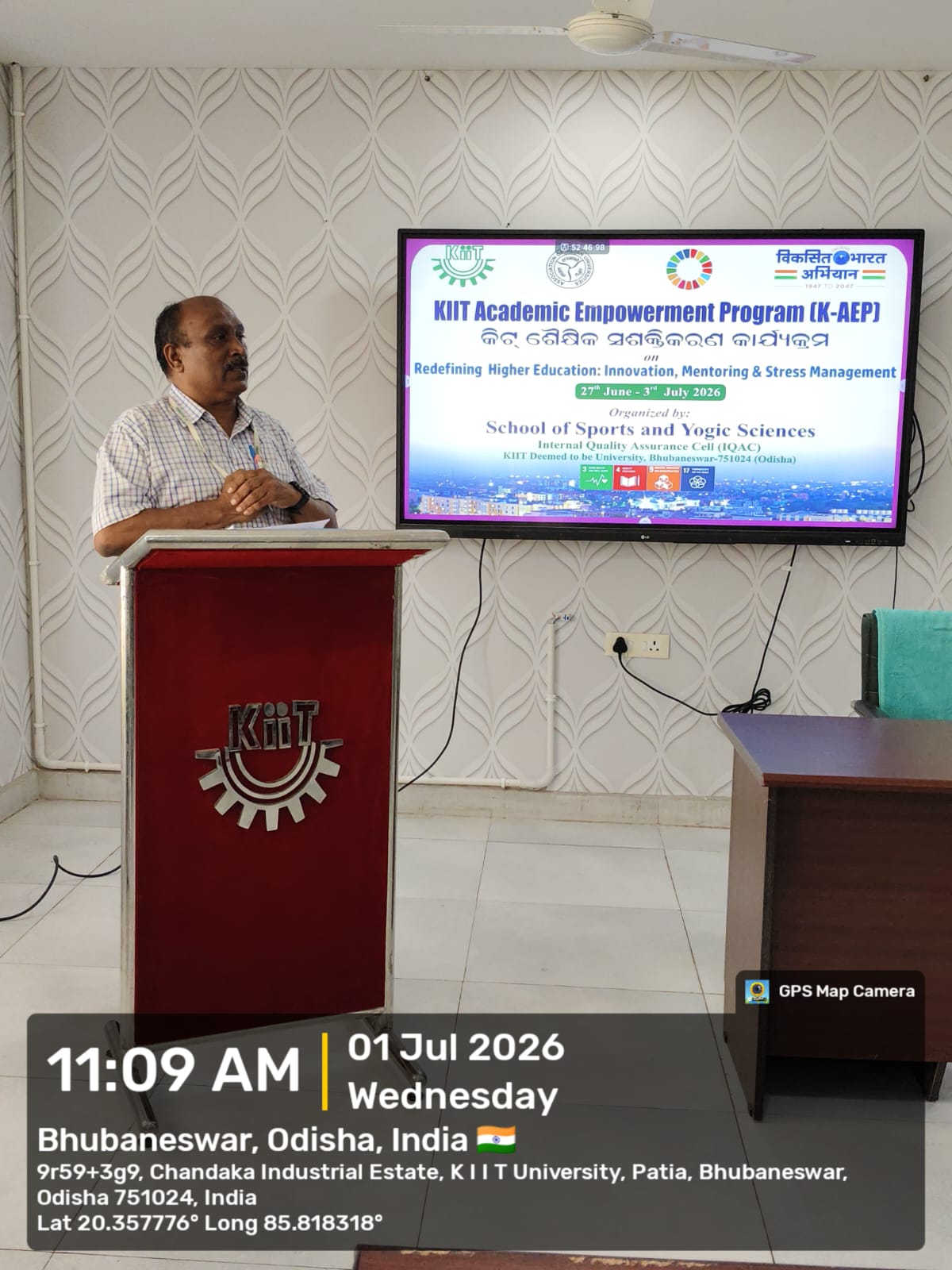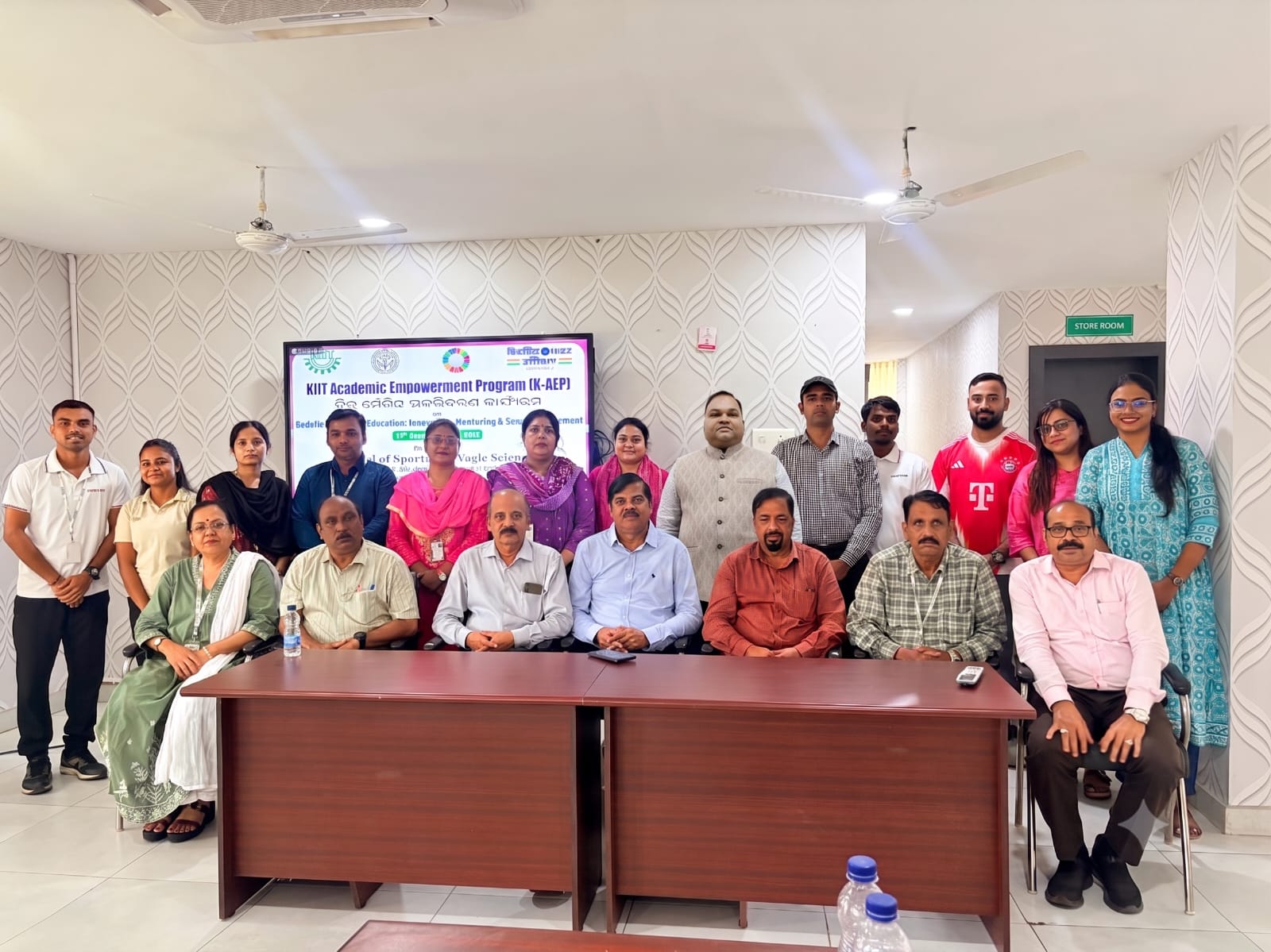



The pursuit of academic excellence is sustained through continuous learning, intellectual engagement and innovation. Reflecting this ethos, the School of Sports and Yogic Sciences (SSYS), KIIT Deemed to be University, successfully organised the KIIT Academic Empowerment Programme (K-AEP) 2026 under the theme “Redefining Higher Education: Innovation, Mentoring & Stress Management.” Bringing together distinguished academicians, researchers and educationists from leading institutions across India, the programme fostered meaningful dialogue on emerging pedagogical practices, research innovation, faculty mentoring, artificial intelligence, holistic well-being and quality enhancement in higher education. Conducted from 27 June to 3 July 2026, the programme brought together distinguished academicians, researchers and educationists from across India to deliberate on contemporary issues shaping the future of higher education.
The Academic Empowerment Programme reflects the enduring educational philosophy of Prof. (Dr.) Achyuta Samanta, Founder of KIIT, KISS and KIMS, who has consistently envisioned education as a dynamic process that extends beyond classrooms to nurture innovation, character, leadership and social responsibility. His unwavering belief that institutions must continuously evolve through knowledge creation, faculty empowerment and research-driven excellence has laid the foundation for initiatives such as K-AEP.
Under his visionary leadership, KIIT has emerged as one of India’s foremost multidisciplinary universities, where academic rigour is complemented by world-class research, international collaborations, sporting excellence and holistic student development. The Academic Empowerment Programme stands as another significant milestone in this journey, reaffirming KIIT’s commitment to creating a vibrant ecosystem of continuous learning and professional development.
Addressing themes of growing relevance in contemporary higher education, the technical sessions explored the integration of physical wellness, mental health, technological innovation, mentoring practices and quality assurance into teaching and learning.
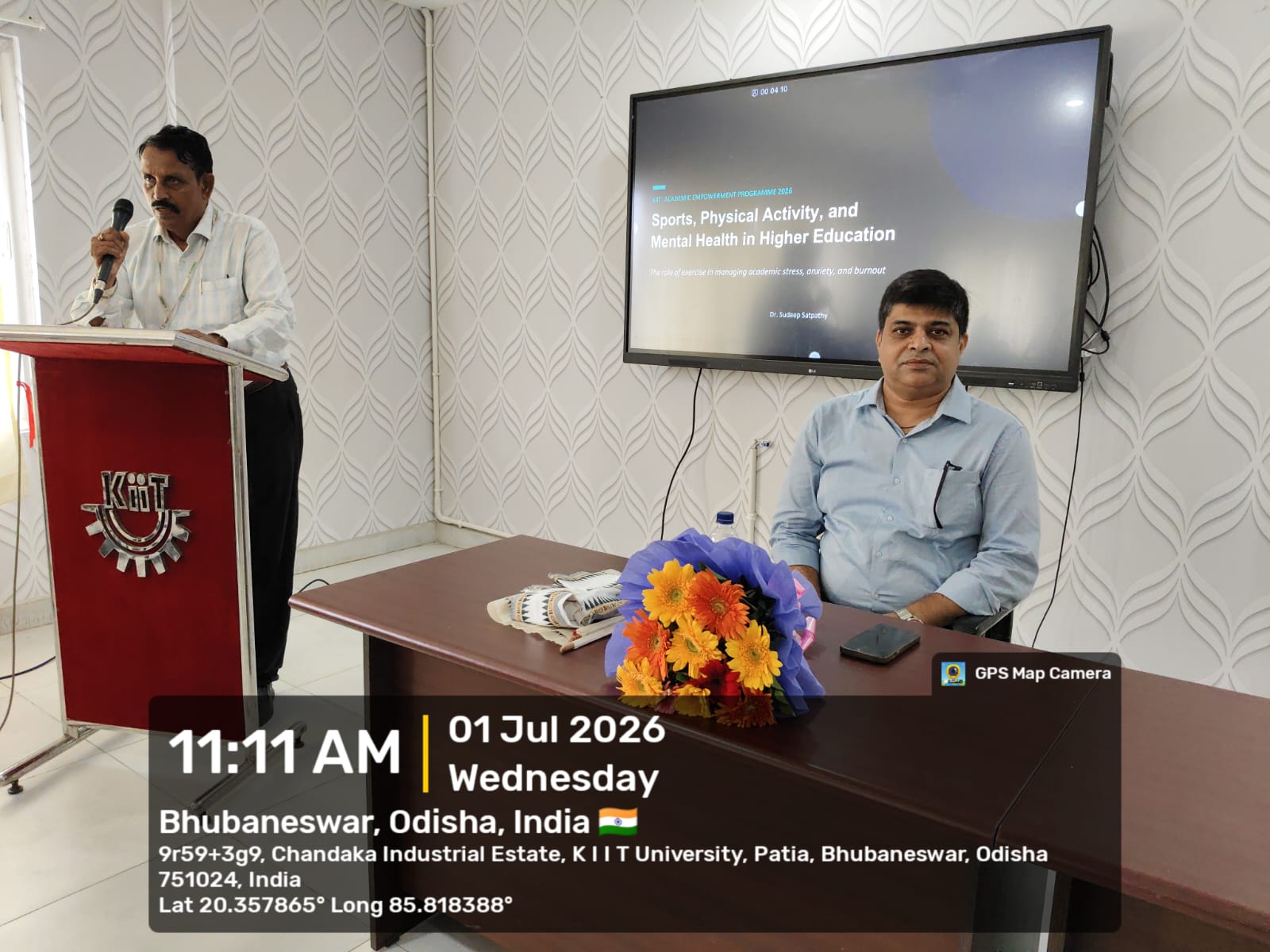
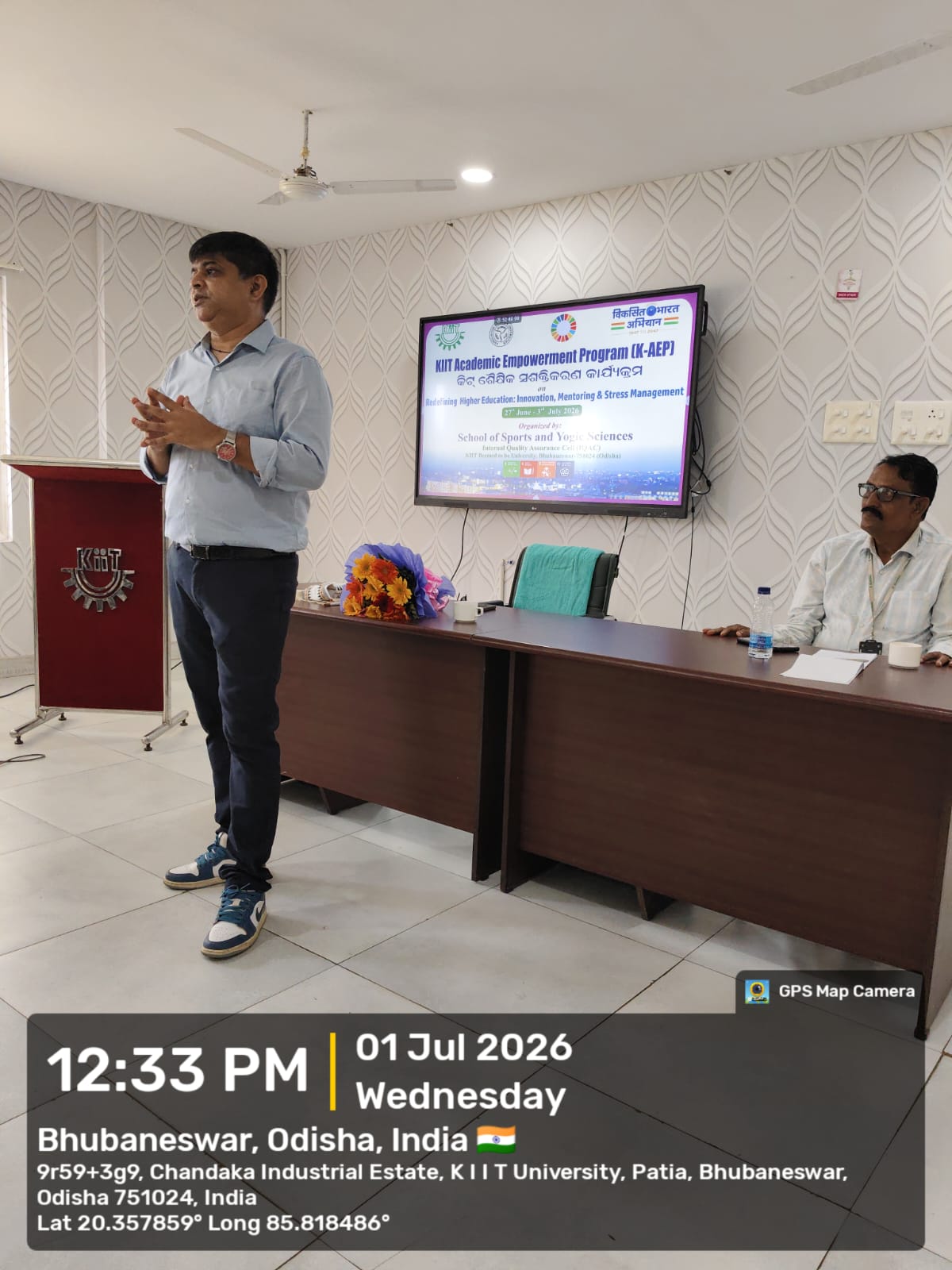
The programme commenced with an engaging and thought-provoking lecture by Prof. (Dr.) Sudeep Satpathy, Professor, KIIMS, on “Sports, Physical Activity, and Mental Health in Higher Education.” Drawing upon both scientific evidence and his rich professional experience as a clinician and academician, Prof. Satpathy eloquently illustrated the profound relationship between physical activity and mental well-being. Through compelling real-life examples and case studies from his distinguished career, he demonstrated how regular exercise can serve as a powerful intervention in managing academic stress, anxiety and burnout. He further emphasised that fostering a culture of physical activity within educational institutions not only enhances psychological resilience but also improves cognitive performance, emotional well-being and overall quality of life for students and educators alike. His insightful reflections encouraged participants to view health and wellness as indispensable pillars of academic success and institutional excellence.
The second technical session featured Dr Ajit Chakravarty, Associate Professor, National Sports University, Manipur, who delivered a virtual lecture on “Research and Innovation in Sports Sciences and Physical Education.” The session introduced participants to emerging developments in exercise physiology, biomechanics, sports psychology and sports management, encouraging interdisciplinary research and innovation that can contribute meaningfully to society.
Continuing the emphasis on holistic education, Dr Satyanarayan Mishra, Faculty in Yoga, Utkal University, discussed “Holistic Wellness in Higher Education: Integrating Sports, Yoga and Fitness.” His presentation highlighted the transformative role of integrated wellness practices in developing healthier, more productive and emotionally resilient academic communities.
The day’s deliberations concluded with an engaging virtual session by Dr. Bandita Satpathy, Research Officer, Philosophic-Literary Research Department, Kaivalyadhama, Lonavala, Pune, on the topic “Yoga and Mindfulness for Enhancing Academic Performance and Well-being.” Coordinated by Dr. Santamati Dash, the session seamlessly integrated traditional yogic wisdom with contemporary scientific evidence. Dr. Satpathy highlighted how mindfulness and yoga practices enhance concentration, emotional regulation, resilience, and overall academic performance, while emphasising their vital role in promoting holistic well-being among students and educators.
The second day of technical sessions focused on emerging technologies, student mentoring and academic quality enhancement.
Prof. Sushanta Kumar Dash, Former Professor and Director, Sports Council, OUAT, Odisha, delivered an impactful lecture on “Harnessing Artificial Intelligence, Digital Technologies and Data Analytics to Enhance Research Efficiency, Publication Quality and Academic Excellence.” The session provided valuable perspectives on the transformative role of artificial intelligence and digital tools in advancing scholarly research, academic publishing and evidence-based decision-making.
Thereafter, the concluding academic session was led by Dr. Sasmita Tripathy, Associate Professor, School of Sports and Yogic Sciences, KIIT Deemed to be University, who facilitated an interactive discussion on Outcome-Based Education (OBE) through the Spring 2026 Course File Review. The session focused on aligning curriculum delivery, assessment strategies and academic documentation with quality assurance mechanisms to ensure continuous institutional improvement.
Throughout the programme, faculty members actively engaged in discussions on research methodologies, pedagogical innovation, curriculum development, mental well-being, artificial intelligence, sports sciences and academic governance. The exchange of ideas not only enriched professional competencies but also strengthened the University’s commitment to evidence-based teaching and globally benchmarked educational practices.
The Academic Empowerment Programme exemplifies KIIT’s philosophy that faculty development is central to institutional excellence. By investing in continuous professional learning, interdisciplinary collaboration and academic innovation, the University continues to strengthen its position as a leader in higher education while preparing educators to address the evolving demands of the twenty-first century.
The School of Sports and Yogic Sciences has consistently played a pioneering role in integrating sports science, physical education, yoga, health sciences and research into a comprehensive academic framework. Through initiatives such as K-AEP, the School continues to create opportunities for faculty members to learn from nationally acclaimed experts while advancing teaching excellence, research productivity and academic quality.
Inspired by the vision of Prof. (Dr.) Achyuta Samanta, KIIT continues to demonstrate that true educational excellence is achieved through the continuous empowerment of educators. The success of the Academic Empowerment Programme 2026 further reinforces the University’s belief that investing in faculty development ultimately transforms classrooms, strengthens research ecosystems, enriches student learning experiences and contributes to nation-building through knowledge, innovation and excellence.
“A great university is built not only by outstanding students but by empowered educators who continuously learn, innovate and inspire. Faculty development remains the cornerstone of academic excellence and meaningful nation-building.”